
You are here
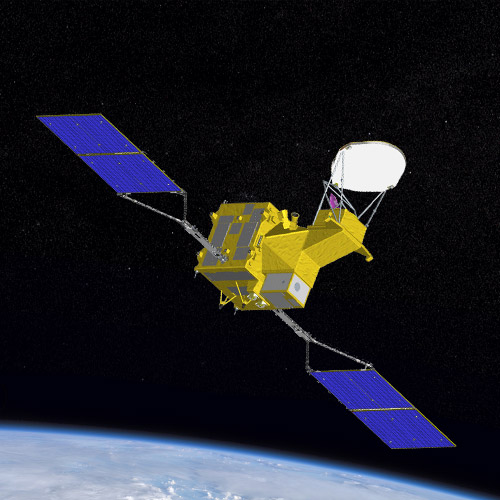
The Global Change Observation Mission-Water (GCOM-W1)
Status:
Extended Mission
Mission Category:
A-Train
Launch Date: May 18, 2012
Japan Aerospace Exploration Agency (JAXA) mission (No NASA contribution)
The “Global Change Observation Mission” (GCOM) aims to construct, use, and verify systems that enable continuous global-scale observations (for 10 to 15 years) of effective geophysical parameters for elucidating global climate change and water circulation mechanisms.
Water circulation changes will be observed by a microwave radiometer onboard the GCOM-W (Water) satellite (scheduled to be launched in Japan Fiscal Year 2012). The GCOM-W will observe precipitation, vapor amounts, wind velocity above the ocean, sea water temperatures, water levels on land areas and snow depths.
Key The Global Change Observation Mission-Water Facts
| Altitude:Distance from sea level. | 700km |
|---|---|
| Inclination: | 98° |
| Origination: | JAXA |
| Instruments: |
AMSR2 (Advanced Microwave Scanning Radiometer 2) |
Relevant Science Focus Areas:
- Atmospheric Composition
- Climate Variability and Change
- Water and Energy Cycle
- Weather
Relevant Science Questions:
- How does the Earth system respond to natural and human-induced changes?
- How is the global Earth system changing?
- How will the Earth system change in the future?
Science Goals:
- Enhanced understanding of water in the Earth's climate system and the global water cycle.
- Enhanced understanding of additional components of the Earth's climate system and their interactions.
- Improved weather forecasting.
Related Applications:
- Agricultural Efficiency
- Coastal Management
- Disaster Management
- Homeland Security
- Water Management
- Weather Prediction